
10 Life Lessons Karate Can Teach Us
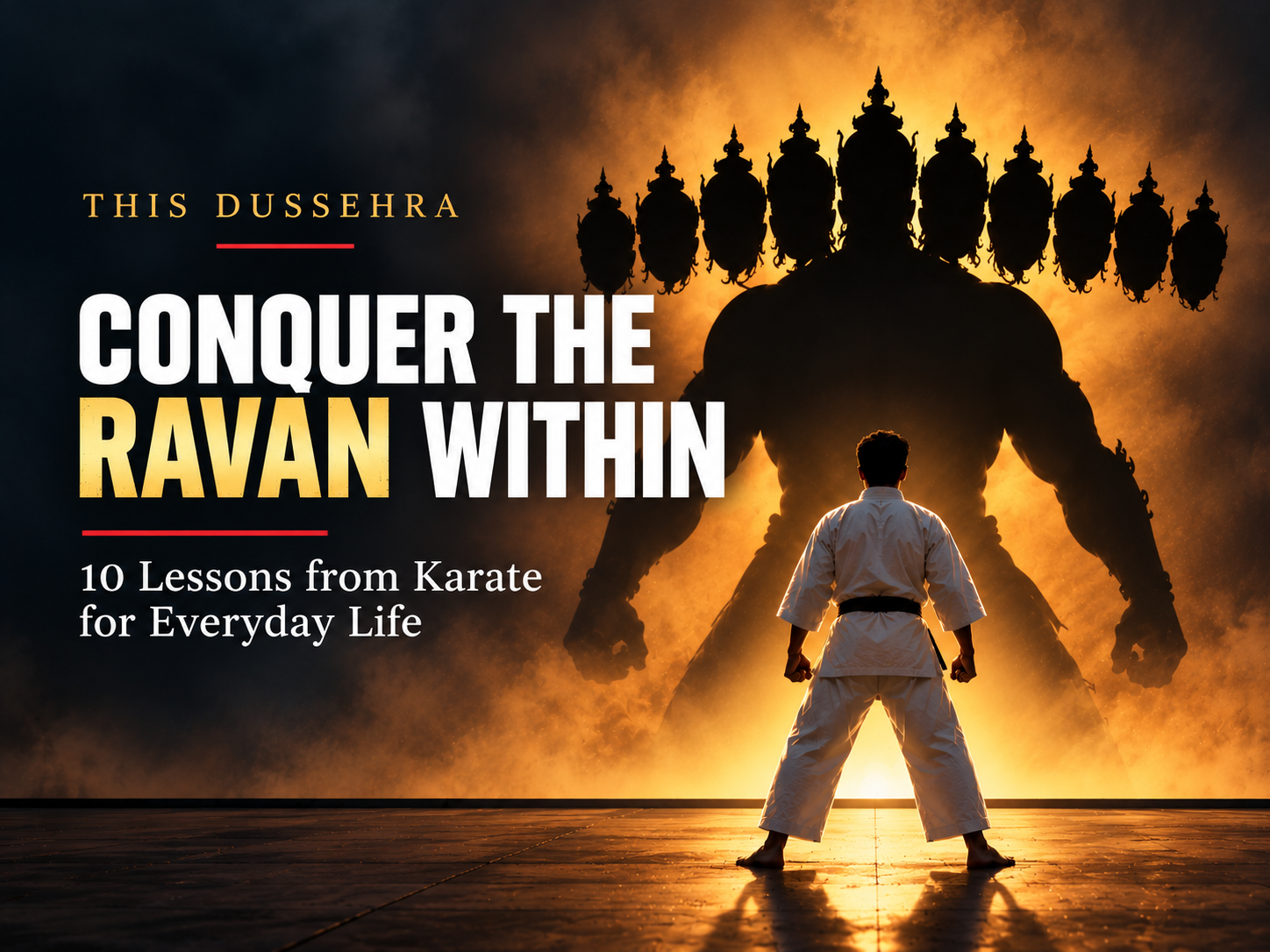
Every Dussehra, we talk about getting rid of the evil within us. We promise ourselves that we’ll control our anger, keep our ego in check and become better people.
But by the next Dussehra, we might be struggling with the same old habits.
Does that mean we’ve failed? I don’t think so. Change takes time, and that shouldn’t stop us from trying.
As a karate instructor, I believe the real value of karate goes beyond learning to punch, kick or defend ourselves. Every class gives us opportunities to practise patience, control our reactions, respect others and learn from our mistakes.
And these lessons aren’t limited to the dojo. We can carry them into our everyday lives.
Here are ten lessons karate can teach us this Dussehra.
1. Respect People, Even When You Don’t Like Them
In karate, we bow before and after training. It’s a way of showing respect to our sensei, fellow students and the art itself.
But a bow means little if we behave disrespectfully the moment we step outside the dojo.
A karateka must learn to respect others even when there’s a disagreement. You don’t have to agree with everyone, but you can disagree without insulting them.
Try this: The next time someone disagrees with you, listen before responding. Practise the same respect outside the dojo that you show inside it.
2. Keep the Promises You Make to Yourself
You cannot earn a belt simply by wishing for it. You have to attend classes, practise your techniques and work on the mistakes your sensei points out.
Progress comes from doing the work, not just wanting the result.
The same applies when we decide to change a habit or work towards a personal goal.
Try this: Pick one thing you’ve been postponing and take a small step today. Treat that commitment the way you’d treat a training session you promised to attend.
3. Pay Attention to What’s Happening Around You
In karate, awareness isn’t just about watching an opponent. It’s about understanding what’s happening around you and responding appropriately.
I’ve realised that this lesson applies to everyday conversations, too.
With content creation, multitasking and constantly thinking about ideas, I gradually stopped giving people my full attention without even realising it. I used to be better at this, and now I’m trying to bring that habit back.
When someone speaks to me while I’m busy, I try to understand what they need. If it’s urgent, I’ll address it. If it can wait, I’ll explain that I’m occupied and return when I can give them my full attention.
I also hope people will respect my time, just as I try to respect theirs.
Being aware means more than noticing what’s around us. It means being present enough to respond well.
4. Stop Blaming Everyone Else
A sensei can demonstrate a technique, correct your stance and explain where you’re going wrong. But the sensei cannot do the training for you.
If you keep making the same mistake, you have to look at what needs to change in your practice.
Life is no different. Sometimes circumstances or other people make things difficult. But there are also times when our own decisions contribute to the problem.
Try this: When something goes wrong, ask yourself, “What part of this is within my control, and what can I do differently next time?”
Taking responsibility isn’t about blaming yourself for everything. It’s about recognising where you can make a difference.
5. Do It Even When You Don’t Feel Like It
Ask anyone who trains regularly, and they’ll tell you that not every session feels good.
Some days, you move well and everything seems to fall into place. On other days, even a basic technique feels difficult. You may be tired, distracted or simply not in the mood.
But you cannot expect to improve only on the days when training feels easy.
Try this: When you don’t feel like starting an important task, give it five minutes. Think of it as showing up for practice. You don’t have to do everything perfectly; you just have to begin.
6. Think Before You React
In karate, power without control can become dangerous. Learning a technique also means learning when and how to use it.
That lesson matters outside the dojo, especially when someone provokes us.
Imagine someone shouting at you on the street or using abusive language. You might feel like shouting back. Walking away may even feel like accepting the insult.
But self-control doesn’t mean allowing someone to mistreat you. It means choosing a response that doesn’t put you at greater risk.
Maintain your distance, leave if you can, and seek help if you feel threatened. Your safety matters more than winning an argument.
There’s also the mental side of it. Even after the incident ends, you might keep replaying the words in your head and allow them to affect the rest of your day.
Try this: Pause and ask yourself, “Will my reaction make this situation better or worse?”
Walking away doesn’t mean you’re weak or that the abuse was acceptable. It means you chose not to escalate a situation just to prove a point.
7. Take Care of Yourself, Too
We often associate karate with hard training, conditioning and pushing ourselves to improve. But training also requires recovery.
Your body needs rest to adapt. Ignoring pain, constantly exhausting yourself or refusing to take a break doesn’t automatically make you stronger.
The same applies to everyday life. Between work and responsibilities, we sometimes treat our own well-being as the least important item on the list.
Try this: Make room for something that helps you recover. It could be a walk, some gentle stretching, a proper meal or getting enough sleep.
Taking care of yourself isn’t avoiding hard work. It’s making sure you can keep going.
8. Never Underestimate the Basics
When we watch an experienced karateka perform a fast combination or a powerful kick, we see the result of years of practice.
What we don’t see is the repetition: the same stance, the same block, the same punch, corrected and practised again and again.
Even experienced practitioners return to the basics because there is always room to improve.
Yet we often look for shortcuts in our own lives. We want quick results without spending enough time learning the fundamentals.
Try this: Choose one skill you want to improve, whether it’s communication, fitness or your work. Identify the basics that matter and practise them consistently.
In karate, a strong foundation makes advanced techniques possible. The same principle applies to most things worth learning.
9. When You Fail, Begin Again
Imagine a child learning a new kick. The child tries, loses balance and gets frustrated.
As a sensei, you don’t expect the child to master it immediately. You correct the movement, offer guidance and encourage another attempt.
Learning takes time.
We experience the same thing outside the dojo. We lose our temper after trying to stay calm, abandon a routine or fall back into an old habit.
That doesn’t mean all our previous effort was wasted.
Try this: When you make a mistake, look at what happened, learn from it and try again. Don’t let one bad attempt convince you that you cannot improve.
In karate, falling short of a target is not the end of training. It’s a reason to understand what needs more work.
10. Stay Humble Enough to Learn
One thing I remind my students is that earning a higher belt doesn’t mean the learning is over.
There is always another detail to notice, a technique to refine or a mistake to correct. The more we learn, the more we realise there is still to understand.
Life works the same way.
Sometimes, we become so confident in our knowledge that we stop listening to others. We find it difficult to accept correction because we think we should already know better.
Try this: When someone offers advice or points out a mistake, listen before dismissing it. If you don’t know something, ask.
In the dojo, a willingness to learn helps us progress. Outside it, that same humility helps us grow as people.
This Dussehra, Let’s Try Again
Every Dussehra, we watch Ravan burn and celebrate the victory of good over evil.
Perhaps we can also think about what we want to overcome within ourselves.
Is it anger? Ego? Jealousy? Impatience? Or the habit of giving up when things become difficult?
We may have made the same promises many times before. And by the next Dussehra, we might still be working on them.
But that shouldn’t stop us from trying again.
At Lebeda Martial Arts Academy, I believe karate is not just about learning to punch, kick or defend ourselves. It’s about what we do with what we learn: how we handle difficult situations, respond to others and work on our own shortcomings.
We don’t become better people simply by knowing what is right. We have to practise it, make mistakes, learn and try again.
That’s true in the dojo. And it’s true in life.
This Dussehra, let’s not just promise to conquer the Ravan within. Let’s practise becoming better, one day at a time.
Wishing you and your family a happy Dussehra.
